Bushranger Revo MK2 Synthetic vs Steel Rope
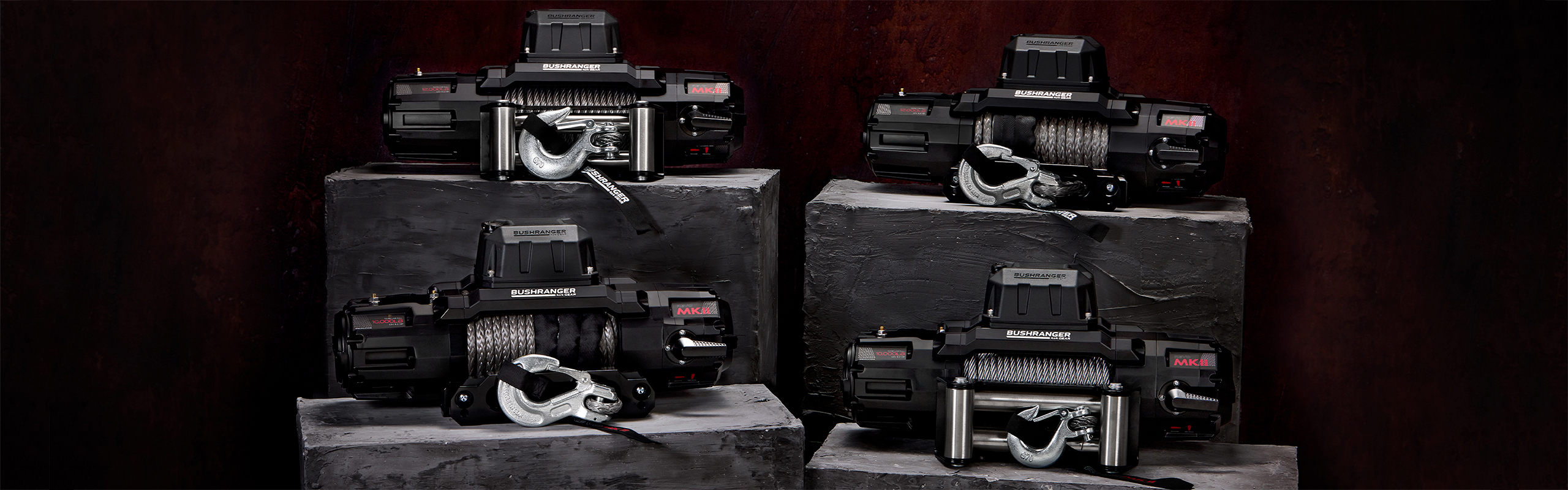
Revo MK2 Synthetic vs Steel Rope
The Bushranger Revo MK2 is a go-to winch for UK 4×4 owners who need dependable recovery gear for green lanes, forestry access, farm tracks, and weekend play-days. One question comes up on almost every build: should you choose synthetic rope or steel rope? In this guide we compare Bushranger Revo MK2 synthetic vs steel rope in terms of safety, weight, handling, durability, maintenance, and real-world use across popular UK trucks like the Ford Ranger, Toyota Hilux, Isuzu D-Max, VW Amarok, Nissan Navara, and Mitsubishi L200.
Why the Bushranger Revo MK2 is trusted in the UK
Built for tough conditions, the Revo MK2 combines robust gearing, dependable braking, efficient motors and IP-rated protection for year-round use. It’s available in 10,000 lb and 12,000 lb capacities to suit mid-size and full-size 4x4s, with either synthetic or steel line options. For an overview of the platform, specs and model options, check our Bushranger Revo MK2 info page.
Bushranger Revo MK2 Synthetic vs Steel Rope: a quick summary
- Synthetic rope: Safer under failure, dramatically lighter, easier to handle, floats in water, but needs regular cleaning and UV protection.
- Steel rope: Very abrasion and heat resistant, cost-effective, proven in industrial settings, but heavier and can be hazardous if it snaps.

Synthetic rope on the Revo MK2: safety and handling advantages
Synthetic lines (commonly HMPE fibres) changed the winching game. On a Bushranger Revo MK2, the weight savings at the very front of the vehicle are instantly noticeable—steering feels lighter and the nose sits a touch higher compared with a steel setup. For UK users who frequently reposition the rope by hand on muddy banks or in water, the soft-hand feel and lower mass are a big deal. If the rope fails under load, synthetic stores less kinetic energy and dramatically reduces the risk of a dangerous whip-back event. That’s why many clubs and marshals recommend synthetic for leisure off-roading.
UK conditions where synthetic shines
- Clay and peat bogs: Rope is easier to clear of mud afterwards; it also floats if you’re dealing with waterlogged ruts.
- Cold-weather handling: Easier to glove, quicker to splice temporary fixes, and less punishing when it brushes skin.
- Weight-sensitive builds: Helps offset added mass from steel bumpers, skid plates and rock sliders.
Steel rope on the Revo MK2: toughness and cost control
Steel cable remains a smart choice for harsh, abrasive environments. If you’re routinely dragging the line over masonry, flint, or steel edge protection, steel rope will shrug off nicks that would quickly fuzz a synthetic braid. It deals better with heat build-up from sustained braking and can be more forgiving when the rope contacts a sharp rock you didn’t see. On job-site vehicles that winch frequently in dirty conditions, the lower up-front cost of steel is attractive.

Where steel earns its keep
- Farm, estate & quarry work: Frequent abrasive pulls, dragging logs or equipment where protection gear isn’t always practical.
- High heat scenarios: Long slow pulls where drum/brake temperatures rise.
- Budget-first builds: Lowest initial cost, easy to replace with like-for-like cable.
Safety gear and technique (whichever rope you choose)
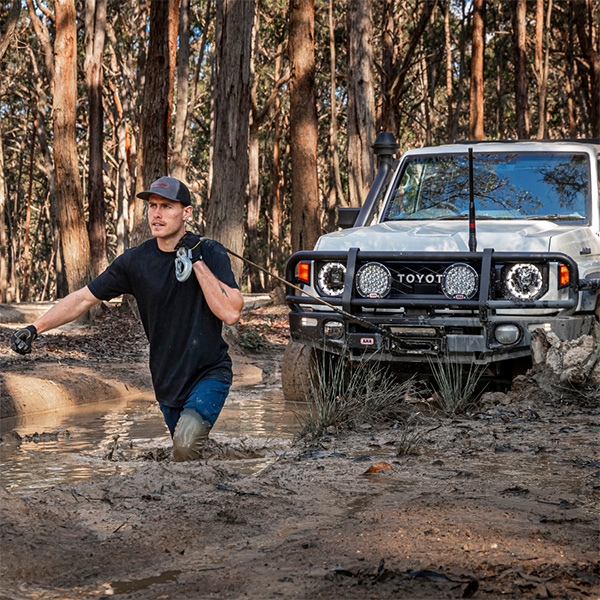
Best practice remains the same: use a rated damper blanket, quality bow shackles or soft shackles to suit the rope type, tree trunk protector, and rated recovery points. Keep spectators well clear, establish a comms plan, and never straddle a loaded rope. The Bushranger AU site has manufacturer guidance you should pair with your local club’s rules and HSE-oriented best practice.
Maintenance: Revo MK2 Synthetic vs Steel on UK trails
Looking after synthetic rope
- Wash after mud: Rinse grit from the fibres to prevent internal abrasion.
- Dry before storage: Prevent mildew and premature fibre wear.
- UV care: Use a winch cover; inspect for glazing, flat spots or cut strands.
- Hardware match: Pair with an alloy hawse fairlead with smooth radii.
Looking after steel rope
- Lube and rust control: Keep it oiled and wipe down after wet days.
- Glove up: Check for fishhooks (broken wires) and kinks each use.
- Replace when kinked or crushed: Don’t attempt to straighten core-damaged wire.
- Roller fairlead: Prefer roller fairleads for steel to reduce abrasion at angles.
Weight, balance and front axle loads
Every kilo on the bumper compresses your front suspension. The Bushranger Revo MK2 synthetic vs steel rope choice can alter total mass on the nose by several kilos. On vehicles that already run winch bumpers, bash plates and a dual-battery system, synthetic helps retain steering feel and ride height. If you’ve uprated springs for load (e.g., towing or constant accessories), the weight penalty of steel might be negligible in practice; but for stock or lightly uprated trucks, synthetic is the easier drive.
Line speed, drum capacity and friction
Synthetic’s smaller effective mass on the drum often makes for a more responsive feel, while steel’s tighter packing can deliver slightly more line on the drum for the same rated length. Real-world difference is modest, but if you’re routinely single-lining long distances, check the specified rope length and fairlead compatibility for your chosen Revo MK2 model.
Which rope suits your truck and terrain?
- Ford Ranger & Amarok (daily + weekends): Synthetic for general green-laning, winter byways and occasional play days.
- Toyota Hilux & Isuzu D-Max (work + leisure): Mixed use—synthetic for leisure bias; steel if you regularly drag, lift or scrape over rough edges.
- Nissan Navara & Mitsubishi L200 (utility spec): Steel for farm/estate vehicles; synthetic for adventure builds and touring.
Cost of ownership and upgrade path
Initial purchase price often favours steel, but factor in gloves, fairlead swaps, and long-term maintenance. Many owners start with steel and later convert to synthetic once they’re comfortable with winching technique. The Bushranger Revo MK2 platform makes rope swaps straightforward when you’re ready.
Accessories that maximise safety and longevity
- Tree protector, rated bow/soft shackles, snatch block, equaliser strap.
- Winch cover (protects synthetic from UV and weather).
- Correct fairlead type (hawse for synthetic, rollers for steel).
- Rope dampers and a clear marshal plan for group recoveries.
Installation guidance & learning resources
When fitting your winch, route the loom cleanly, isolate power, and ensure the control box is accessible even with winter gloves. See our Revo MK2 info page and subscribe to our DNA 4×4 YouTube channel for UK-specific walkthroughs and safety tips. For factory-level specs and manuals, visit the Bushranger AU website.
FAQs — Bushranger Revo MK2 Synthetic vs Steel Rope
- Is synthetic rope safer? Generally yes—lower stored energy reduces recoil risk if a failure occurs.
- Will synthetic soak up water? It can carry water and mud; rinse and dry after use to protect fibres.
- Does steel last longer? In abrasive, hot, or industrial settings—often yes, if maintained properly.
- Can I swap rope types later? Yes. Many owners start with steel and upgrade to synthetic later.
- Which suits UK green lanes? Most leisure users prefer synthetic for weight, handling and safety.
Conclusion: picking the right rope for your Revo MK2 Synthetic vs Steel
If your 4×4 is a daily driver with weekend lanes, the Bushranger Revo MK2 synthetic vs steel rope decision usually tilts to synthetic for safety, weight and ease of use. If your truck earns its keep on farms, estates or quarries and winching is a frequent, abrasive task, steel remains a smart, durable option. Either way, the Bushranger Revo MK2 platform is a solid foundation—and we’re here to help you choose the right spec for your build.
Next steps: Browse our Recovery → Winches, read the Revo MK2 info page, and check out install and usage clips on our YouTube channel. For manufacturer data, visit Bushranger AU.
