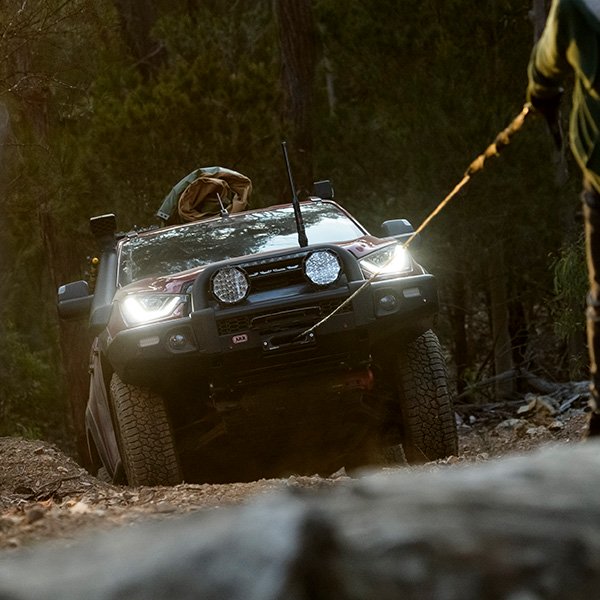
10000lb vs 12000lb Winch – Which One Should You Choose?

10000lb vs 12000lb Winch – Which One Should You Choose?
10000lb vs 12000lb winch

10000lb vs 12000lb Winch – Which One Should You Choose?

If you’re comparing a 10000lb vs 12000lb winch, you’re not alone. It’s one of the most common questions in off-road recovery. Both sizes can get the job done, but the right choice depends on your vehicle weight, terrain, and how often you rely on your winch. In this guide, we’ll explain the real-world differences and highlight how the Bushranger REVO MKII range fits into the picture.

10000lb vs 12000lb Winch: How Ratings Work

The capacity number is the maximum pulling force on the first layer of rope. A 10000lb winch is rated to 10,000 pounds, while a 12000lb winch is rated to 12,000 pounds. As more layers build up on the drum, effective pulling power decreases while line speed increases. This means both options perform differently depending on your recovery scenario.

  • First layer: Maximum pulling power, slower line speed.
  • Upper layers: Lower pulling power, faster line speed.
  • Line speed vs load: Heavier loads = slower winch speed.
  • Duty cycle: More capacity reduces strain and heat during long pulls.

Which Vehicles Suit a 10000lb vs 12000lb Winch?

Best for 10000lb Winch

  • Mid-size 4×4 utes with moderate accessories.
  • Touring SUVs used for green-laning, beaches, and lighter trails.
  • Drivers who want lighter weight up front and faster line speed under moderate loads.

Best for 12000lb Winch

  • Heavily equipped dual-cabs and wagons with canopies, drawers, or roof tents.
  • Vehicles operating in deep mud or heavy clay where suction adds resistance.
  • Owners who want a larger safety margin and fewer double-line pulls.

Bushranger Revo MK2 Winch

Pros & Cons of a 10000lb vs 12000lb Winch

Pros of 10000lb Winch

  • Lighter overall weight on the front axle.
  • Often quicker line speed on moderate loads.
  • Typically more affordable than larger models.

Cons of 10000lb Winch

  • Smaller safety margin for heavier rigs.
  • May require more frequent use of a snatch block.

Pros of 12000lb Winch

  • More pulling power for loaded vehicles.
  • Handles sticky mud and steep inclines with ease.
  • Less strain on the winch motor during heavy pulls.

Cons of 12000lb Winch

  • Slightly heavier on the nose.
  • Can be slower on light loads compared to smaller units.

Terrain Scenarios for 10000lb vs 12000lb Winch

Sand & Beach Driving

A 10000lb winch often recovers mid-size utes quickly thanks to faster line speed at lighter loads. For fully-loaded wagons in soft dunes, a 12000lb winch provides extra headroom.

Mud & Clay

Mud adds suction and drag. Heavier rigs benefit from the 12000lb winch’s extra torque, while lighter rigs can manage with a 10000lb winch and a snatch block.

Rock Crawling & Technical Trails

Both capacities work well. Many prefer the lighter feel of a 10000lb winch on mid-size vehicles, while expedition builds lean toward the 12000lb winch for peace of mind.

Spotlight: Bushranger REVO MKII 10000lb vs 12000lb

The Bushranger REVO MKII winch family is available in both 10000lb and 12000lb capacities, with synthetic or steel line options. They’re designed for reliability, advanced protection, and excellent line speed-to-pull ratios.

  • 10000lb REVO MKII: Balanced choice for mid-weight utes and SUVs.
  • 12000lb REVO MKII: Ideal for fully equipped rigs with touring payloads.

FAQs: 10000lb vs 12000lb Winch

Is a 10000lb winch enough for my ute?

Yes, for most mid-size rigs with moderate gear. Heavily loaded vehicles may need a 12000lb winch.

Does a 12000lb winch always pull slower?

Not always. At heavy loads, the 12000lb winch often maintains better speed because it works with less strain.

Which rope is best for a 12000lb winch?

Synthetic rope reduces overall weight and is easier to handle, making it popular for larger winches.

Conclusion: Choosing Between a 10000lb vs 12000lb Winch

For mid-weight 4×4 vehicles, a 10000lb winch offers speed and lighter handling. For heavier rigs with touring gear, a 12000lb winch provides the pulling power and safety margin to get you unstuck with less effort. Whichever you choose, make sure your electrics and recovery gear are up to the task.

10000lb vs 12000lb winch
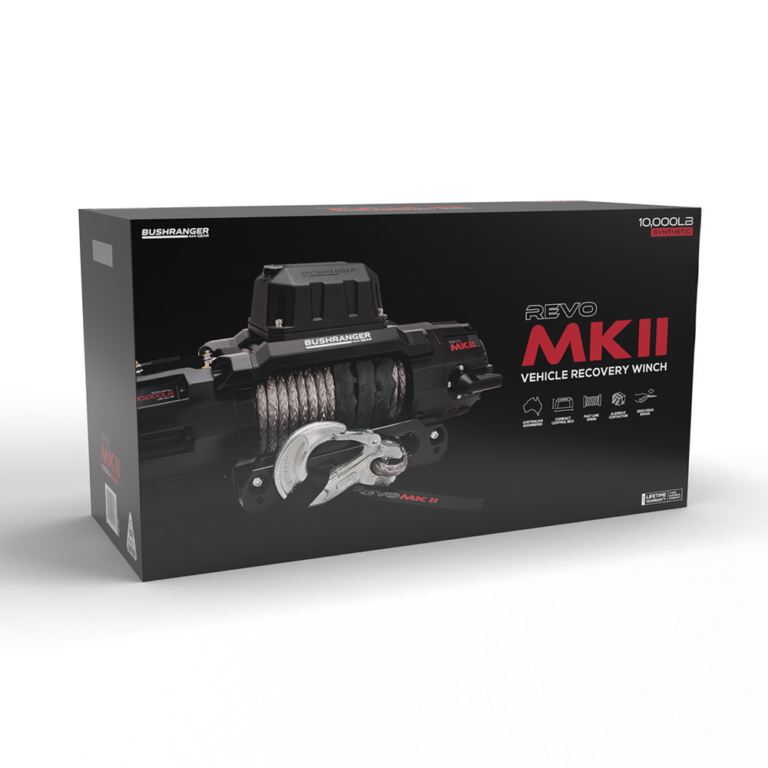
Bushranger REVO MKII: available in 10000lb and 12000lb with synthetic or steel line.

Explore More

Shop more camping and touring gear for your build, or visit our DNA4x4s YouTube channel for installation tips and reviews.

Bushranger Revo MK2 Synthetic vs Steel Rope

Bushranger Revo MK2 Winch

Revo MK2 Synthetic vs Steel Rope

The Bushranger Revo MK2 is a go-to winch for UK 4×4 owners who need dependable recovery gear for green lanes, forestry access, farm tracks, and weekend play-days. One question comes up on almost every build: should you choose synthetic rope or steel rope? In this guide we compare Bushranger Revo MK2 synthetic vs steel rope in terms of safety, weight, handling, durability, maintenance, and real-world use across popular UK trucks like the Ford Ranger, Toyota Hilux, Isuzu D-Max, VW Amarok, Nissan Navara, and Mitsubishi L200.

Why the Bushranger Revo MK2 is trusted in the UK

Built for tough conditions, the Revo MK2 combines robust gearing, dependable braking, efficient motors and IP-rated protection for year-round use. It’s available in 10,000 lb and 12,000 lb capacities to suit mid-size and full-size 4x4s, with either synthetic or steel line options. For an overview of the platform, specs and model options, check our Bushranger Revo MK2 info page.

Bushranger Revo MK2 Synthetic vs Steel Rope: a quick summary

  • Synthetic rope: Safer under failure, dramatically lighter, easier to handle, floats in water, but needs regular cleaning and UV protection.
  • Steel rope: Very abrasion and heat resistant, cost-effective, proven in industrial settings, but heavier and can be hazardous if it snaps.

Synthetic rope on the Revo MK2: safety and handling advantages

Synthetic lines (commonly HMPE fibres) changed the winching game. On a Bushranger Revo MK2, the weight savings at the very front of the vehicle are instantly noticeable—steering feels lighter and the nose sits a touch higher compared with a steel setup. For UK users who frequently reposition the rope by hand on muddy banks or in water, the soft-hand feel and lower mass are a big deal. If the rope fails under load, synthetic stores less kinetic energy and dramatically reduces the risk of a dangerous whip-back event. That’s why many clubs and marshals recommend synthetic for leisure off-roading.

UK conditions where synthetic shines

  • Clay and peat bogs: Rope is easier to clear of mud afterwards; it also floats if you’re dealing with waterlogged ruts.
  • Cold-weather handling: Easier to glove, quicker to splice temporary fixes, and less punishing when it brushes skin.
  • Weight-sensitive builds: Helps offset added mass from steel bumpers, skid plates and rock sliders.

Steel rope on the Revo MK2: toughness and cost control

Steel cable remains a smart choice for harsh, abrasive environments. If you’re routinely dragging the line over masonry, flint, or steel edge protection, steel rope will shrug off nicks that would quickly fuzz a synthetic braid. It deals better with heat build-up from sustained braking and can be more forgiving when the rope contacts a sharp rock you didn’t see. On job-site vehicles that winch frequently in dirty conditions, the lower up-front cost of steel is attractive.

revo 12000lbs mk11 12

Where steel earns its keep

  • Farm, estate & quarry work: Frequent abrasive pulls, dragging logs or equipment where protection gear isn’t always practical.
  • High heat scenarios: Long slow pulls where drum/brake temperatures rise.
  • Budget-first builds: Lowest initial cost, easy to replace with like-for-like cable.

Safety gear and technique (whichever rope you choose)

Best practice remains the same: use a rated damper blanket, quality bow shackles or soft shackles to suit the rope type, tree trunk protector, and rated recovery points. Keep spectators well clear, establish a comms plan, and never straddle a loaded rope. The Bushranger AU site has manufacturer guidance you should pair with your local club’s rules and HSE-oriented best practice.

Maintenance: Revo MK2 Synthetic vs Steel on UK trails

Looking after synthetic rope

  • Wash after mud: Rinse grit from the fibres to prevent internal abrasion.
  • Dry before storage: Prevent mildew and premature fibre wear.
  • UV care: Use a winch cover; inspect for glazing, flat spots or cut strands.
  • Hardware match: Pair with an alloy hawse fairlead with smooth radii.

Looking after steel rope

  • Lube and rust control: Keep it oiled and wipe down after wet days.
  • Glove up: Check for fishhooks (broken wires) and kinks each use.
  • Replace when kinked or crushed: Don’t attempt to straighten core-damaged wire.
  • Roller fairlead: Prefer roller fairleads for steel to reduce abrasion at angles.

Weight, balance and front axle loads

Every kilo on the bumper compresses your front suspension. The Bushranger Revo MK2 synthetic vs steel rope choice can alter total mass on the nose by several kilos. On vehicles that already run winch bumpers, bash plates and a dual-battery system, synthetic helps retain steering feel and ride height. If you’ve uprated springs for load (e.g., towing or constant accessories), the weight penalty of steel might be negligible in practice; but for stock or lightly uprated trucks, synthetic is the easier drive.

Line speed, drum capacity and friction

Synthetic’s smaller effective mass on the drum often makes for a more responsive feel, while steel’s tighter packing can deliver slightly more line on the drum for the same rated length. Real-world difference is modest, but if you’re routinely single-lining long distances, check the specified rope length and fairlead compatibility for your chosen Revo MK2 model.

Which rope suits your truck and terrain?

  • Ford Ranger & Amarok (daily + weekends): Synthetic for general green-laning, winter byways and occasional play days.
  • Toyota Hilux & Isuzu D-Max (work + leisure): Mixed use—synthetic for leisure bias; steel if you regularly drag, lift or scrape over rough edges.
  • Nissan Navara & Mitsubishi L200 (utility spec): Steel for farm/estate vehicles; synthetic for adventure builds and touring.

Cost of ownership and upgrade path

Initial purchase price often favours steel, but factor in gloves, fairlead swaps, and long-term maintenance. Many owners start with steel and later convert to synthetic once they’re comfortable with winching technique. The Bushranger Revo MK2 platform makes rope swaps straightforward when you’re ready.

Accessories that maximise safety and longevity

  • Tree protector, rated bow/soft shackles, snatch block, equaliser strap.
  • Winch cover (protects synthetic from UV and weather).
  • Correct fairlead type (hawse for synthetic, rollers for steel).
  • Rope dampers and a clear marshal plan for group recoveries.

Installation guidance & learning resources

When fitting your winch, route the loom cleanly, isolate power, and ensure the control box is accessible even with winter gloves. See our Revo MK2 info page and subscribe to our DNA 4×4 YouTube channel for UK-specific walkthroughs and safety tips. For factory-level specs and manuals, visit the Bushranger AU website.

Revo MK2 Synthetic vs Steel

FAQs — Bushranger Revo MK2 Synthetic vs Steel Rope

  • Is synthetic rope safer? Generally yes—lower stored energy reduces recoil risk if a failure occurs.
  • Will synthetic soak up water? It can carry water and mud; rinse and dry after use to protect fibres.
  • Does steel last longer? In abrasive, hot, or industrial settings—often yes, if maintained properly.
  • Can I swap rope types later? Yes. Many owners start with steel and upgrade to synthetic later.
  • Which suits UK green lanes? Most leisure users prefer synthetic for weight, handling and safety.

Conclusion: picking the right rope for your Revo MK2 Synthetic vs Steel

If your 4×4 is a daily driver with weekend lanes, the Bushranger Revo MK2 synthetic vs steel rope decision usually tilts to synthetic for safety, weight and ease of use. If your truck earns its keep on farms, estates or quarries and winching is a frequent, abrasive task, steel remains a smart, durable option. Either way, the Bushranger Revo MK2 platform is a solid foundation—and we’re here to help you choose the right spec for your build.

Next steps: Browse our Recovery → Winches, read the Revo MK2 info page, and check out install and usage clips on our YouTube channel. For manufacturer data, visit Bushranger AU.


10000lb vs 12000lb winch

Bushranger Revo MK2 Winch | New UK Release — DNA 4×4

Bushranger Revo MK2 Winch — New Release for UK Off-Roaders

The Bushranger Revo MK2 Winch is a brand-new release engineered in Australia for serious 4×4 recovery — and it’s now available in the UK through DNA 4×4

Bushranger Revo MK2 Winch

Defines a new era in dependable recovery:
compact fitment, smarter electrics, sealed durability and user-friendly operation.
As one of the first UK retailers to spotlight this new model, DNA 4×4 is bringing you
the details that matter—so you can choose with confidence and get trail-ready.

For Bushranger’s official announcement, visit
bushranger.com.au/revo-mkii.

Bushranger Revo MK2 Winch logo

Key Features & Engineering Excellence

  • Compact multi-fit control box for clean installs behind modern bull bars/bumpers.
  • Albright contactor (sealed) for reliable current delivery and longevity.
  • Zero-drag, gearbox-mounted brake — 100% load holding, fast powered unspooling under no load.
  • Series-wound 12 V motor tuned for strong line speeds with sensible current draw.
  • Four-stage steel gearing in a tough alloy body with durable satin black finish.
  • No-lift clutch handle, factory clocked for most bull bar layouts (90° turn).
  • IP68 sealing to motor & gearbox for water, dust and debris protection.
  • 500 A isolation switch included for safety when not in use.
  • Wireless + wired controller on synthetic models (wire models include wired controller).
Winch Control Box
Engineered & Proven in Australia

Bushranger Revo MK2 Winch Models, Capacities & Rope Options

The Revo MK2 range covers the most popular capacities for modern touring and work rigs:

  • 10,000 lb — ideal for lighter vehicles and mid-size 4×4 platforms.
  • 12,000 lb — better for heavier wagons and fully-laden builds.

Each capacity is available with synthetic rope (light weight, easy handling) or
wire cable (traditional, abrasion resistant). Synthetic models include a wireless
controller (plus 5 m lead); wire models include a wired controller.

Quick Links to Buy Bushranger Revo MK2 Winch

Explore more options in Recovery → Winches — and see all Recovery gear and Camping essentials.

Comparison: Which Revo MK2 is Right for You?

Model Capacity Rope Type Controller Fairlead Best For
RWM100S 10,000 lb Synthetic Wireless + 5 m wired Aluminium hawse Mid-size 4×4s, weight-conscious builds
RWM100W 10,000 lb Wire Wired Stainless roller Traditionalists, abrasion-heavy terrain
RWM120S 12,000 lb Synthetic Wireless + 5 m wired Aluminium hawse Heavier tourers, fully-laden rigs
RWM120W 12,000 lb Wire Wired Stainless roller High abrasion environments, heat tolerance

Smarter Installation & Everyday Usability

BushRanger control box
Compact multi-fit control box for cleaner fitment

The compact control box offers multiple mounting points for neat packaging. Add the included 500 A isolation switch for on-road safety, and enjoy tidy wiring with heavy-gauge leads designed for the job.

Bushranger Revo MK2 Winch Effortless Clutch Operation

Bushranger no-lift clutch handle
Effortless no-lift clutch operation

The no-lift clutch handle is factory clocked for most bull bar layouts and takes just a 90° twist to engage or disengage—easy to reach even when your winch is tucked away.

Built to Work When It Counts

Bushranger Revo MK2 Winch in action off-road
Built to work when it counts — tough UK trails

Hardened steel gearing, an alloy body and IP68 sealing to motor and gearbox mean confident performance in water, mud and dust. The zero-drag brake holds the load and allows quick, controlled spooling when you’re setting up a recovery.

Bushranger Revo MK2 Winch Specifications (At a Glance)

Part Numbers
RWM100S, RWM100W, RWM120S, RWM120W
Dimensions
582 × 194 × 185 mm (10,000 lb) / 600 × 194 × 185 mm (12,000 lb)
Weight (fitted)
32.7 kg | 44.2 kg | 33.9 kg | 46.7 kg (model dependent)
Rated Line Pull (1st layer)
10,000 lb (4536 kg) / 12,000 lb (5443 kg)
Motor
3.9 kW (5.2 HP) / 4.6 kW (6.2 HP) series-wound 12 V
Electrical
Albright DC88P contactor
Gearbox
2-stage planetary + 2-stage spur (4-stage hardened steel)
Brake
Gearbox-mounted, proportional friction, 100% load holding
Clutch
Rotating ring gear — 90° turn handle (no-lift)
Fairlead
Aluminium hawse (synthetic) / 304 stainless roller (wire)
Sealing
IP68 motor & gearbox
Warranty
Limited lifetime (7-year electrical)
Certifications
CE

Bushranger Revo MK2 Winch Real-World Recovery

Bushranger Revo MK2 Winch recovery on steep off-road track
Engineered for purpose — proven recovery in the toughest terrain

What’s Included in the Box

  • Bushranger Revo MK2 Winch (model/rope as ordered)
  • Wireless controller + receiver and 5 m lead (synthetic models)
  • Wired controller with 5 m lead (wire models)
  • Aluminium hawse fairlead (synthetic) or stainless steel roller fairlead (wire)
  • Forged hook with pull tag
  • Main power isolation switch with universal bracket
  • Multi-fit control box with Albright contactor & heavy-gauge wiring
  • High-tensile mounting hardware

Bushranger Revo MK2 Winch — FAQs

Bushranger Revo MK2 Winch logo

What’s the difference between Bushranger Revo MK2 Winch 10,000 lb and 12,000 lb models?

Capacity. Choose 10k for lighter vehicles; 12k for heavier or fully-laden rigs. When unsure, step up a size for a safety margin.

Should I choose synthetic rope or steel cable?

Synthetic is lighter and easier to handle (and it floats). Steel is highly abrasion-resistant and tolerant of heat. Many daily drivers prefer synthetic for ease of use.

Do synthetic models include a wireless controller?

Yes. Synthetic-rope Revo MK2 winches include a wireless hand controller (plus a 5 m wired lead). Wire-rope models include the wired controller.

Is the Revo MK2 waterproof?

The motor and gearbox are sealed to IP68, protecting against water, dust and debris in real-world conditions.

Where can I see the full range?

Shop the category: Recovery → Winches, or read our Revo MK2 info page. Official details: Bushranger AU.

Ready to Equip Your 4×4?

Bushranger Revo MK2 Winch setting up a muddy recovery
Real use, real confidence —  in action

We stock the latest Bushranger Revo MK2 Winch models and can help you choose the right capacity and rope type for your build.
Order online or speak to our team—then check out installs and tips on
YouTube @dna4x4s.


Right Menu Icon